Be the FIRST TO KNOW when the next episode releases!

Lead together

As parents, work as a team to share the mental load and communicate with intention. Create alignment, improve communication, and show up as a united front.

Podcast thumbnail for episode 97 about creating a shared family rhythm, featuring Dianne Jimenez and the text “1 Question Stops Fights.”
Lead together, Podcast

#97: Creating a Shared Family Rhythm (Even if Your Partner Has a Different Style)

Feeling like the default parent because your partner has a different style? In this episode, Dianne breaks down why this feels so activating, why it’s not a “character” issue, and how to create a shared family rhythm that reduces reminders, decision fatigue, and resentment. You’ll learn how to set “minimum standard agreements” that create predictable expectations at home, even when you and your partner have different approaches.

Frustrated mom because her child is glued to her phone
Lead together, Podcast

#92: Default Parent Mental Load: How to Stop Being the Only Responsible Adult

Default Parent Mental Load: How to Stop Being the Only Responsible Adult

If you’ve ever thought, “I’m the only responsible adult in this house,” and then immediately felt guilty for thinking it… you’re not alone.

In fact, this is one of the most common things I hear from overwhelmed moms — especially the default parent.

And here’s the good news: this isn’t a “try harder” situation. Instead, it’s usually a home systems problem. More specifically, it’s a responsibility distribution problem.

So in this post, I’m going to break down why this keeps happening, and then I’ll give you one simple move you can make this week to start sharing the load.

Why the Default Parent Mental Load Feels So Heavy
First, let’s name what’s really going on.

This isn’t a motivation issue. It’s not that you need a prettier planner. And it’s not that you need better time management.

Rather, the problem is that one person is carrying too many roles at the same time.

Because when you’re the one remembering, noticing, planning, reminding, and following up, you’re not just “doing chores.”

You’re doing management. And management is exhausting.

The Real Problem Isn’t the Chores
A lot of moms assume the problem is the tasks.
However, the tasks are usually not the main issue.
Instead, what’s exhausting is the invisible work behind the tasks. So let’s talk about that.

The Invisible Job List (aka the Mental Load)
Most moms aren’t only doing the physical labor. They’re also running the invisible list behind everything.

For example, someone might take out the trash.
But who noticed it was full?
Who remembered trash day?
Who tied the bag, replaced the liner, and checked the other bins?

That invisible tracking is the mental load.
And when you carry the invisible list, you become the default parent — even if other people “help.”


mompreneur working from home
Lead together, Podcast, Raise Responsible Kids

#82 – Real Questions from Real Moms: How to Build Routines That Actually Work

In this special episode of the Organized-ish Parent podcast, I answer five questions submitted by listeners on parenting, organization, and balancing life. I discuss techniques for fostering child independence, establishing effective routines, balancing household chores and business responsibilities without burning out, maintaining commitment to chore charts, and encouraging children to follow through on tasks.

Make sure you have a pen and notebook on hand so you can take notes because this episode is packed with actionable advice to help parents organize their lives and foster a harmonious home environment.

kids on their smartphones and electronic devices in the background
Lead together, Podcast, Raise Responsible Kids

#81: Building Real Connection with Our Kids in a Digital Age

Building Real Connection with Our Kids in a Digital Age
Ever sat at a restaurant and noticed that every kid at the table has their head down, scrolling on a phone?
That’s exactly what sparked this episode—and this post.
A few weeks ago, I was out with friends and family, and someone leaned over and asked me, “How do you do it? How are your kids not glued to their phones?”
My teens were sitting together, coloring and laughing—without a single screen in sight. The truth? They actually do have phones—just not smartphones. And that simple choice has changed the way we connect as a family.
But this isn’t just about devices. It’s about how small, well-intentioned habits can shape big outcomes in our parenting. Sometimes, without realizing it, we fall into what’s called accidental parenting.

What Is Accidental Parenting?
I first came across this concept over 15 years ago in The Secrets of the Baby Whisperer by Melinda Blau and Tracy Hogg. It’s the idea that sometimes, we create patterns unintentionally—habits that might soothe or help in the short term but make things harder in the long run.

title of the podcast episode: 10 Problems Moms Face Without Communication About Parenting and Chores
General, Lead together, Podcast

#77: 10 Problems Moms Face Without Communication About Parenting and Chores

Being a mom means you’re already juggling a million things—your kids, your business or job, the house, meals, schedules… and somehow, you’re also the default person everyone looks to for “what’s next.” Here’s the kicker: when there’s no real communication with your partner about parenting and household chores, everything feels harder than it should be.
In this episode of the Organized-ish Parent Podcast, I break down the 10 problems moms face when communication is missing—and how those problems play out at home.
Spoiler: they’re problems you don’t need to keep living with.

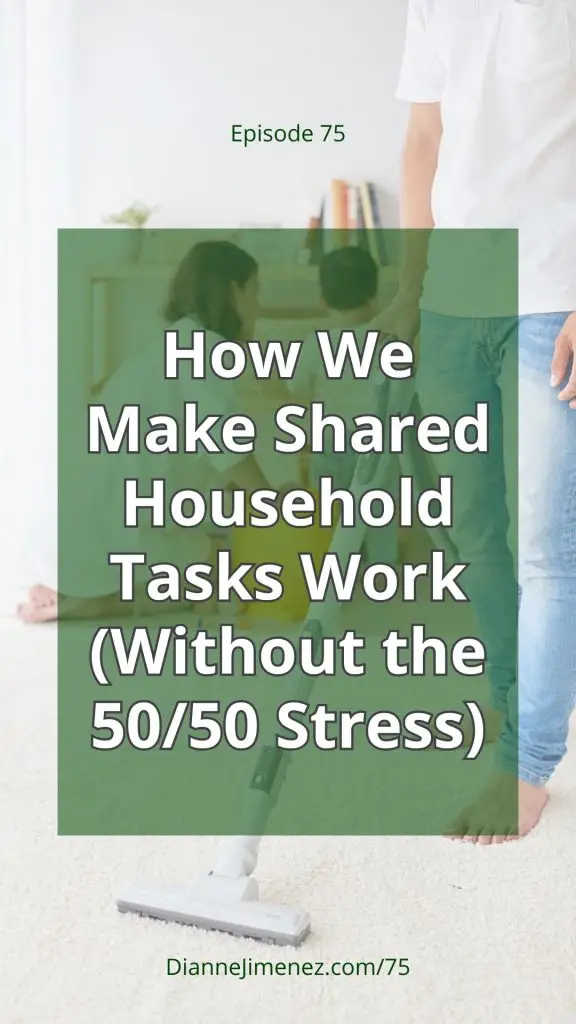
Both parents working together and sharing household tasks in front of their kid.
Lead together, Podcast

#75: How We Make Shared Household Tasks Work (Without the 50/50 Stress)

Why Shared Household Tasks Matter 

Let’s be real: the idea of splitting chores 50/50 sounds great… until life happens. Kids, work, business, school schedules—suddenly, that “equal share” feels impossible and stressful.

In our house, we’ve learned that shared household tasks aren’t about rigid fairness—they’re about flexibility and teamwork. Some seasons look like 80/20, others 60/40. And that’s okay.

In this post, I’m pulling back the curtain on how we actually make it work—what’s changed over the years, what’s stayed the same, and how involving our kids has been a game-changer. If you’ve ever wondered how to stop doing it all (without nagging or micromanaging), this one’s for you.

Scroll to Top