
Be the FIRST TO KNOW when the next episode releases!

Podcast Episodes

Podcast episodes By Dianne Jimenez

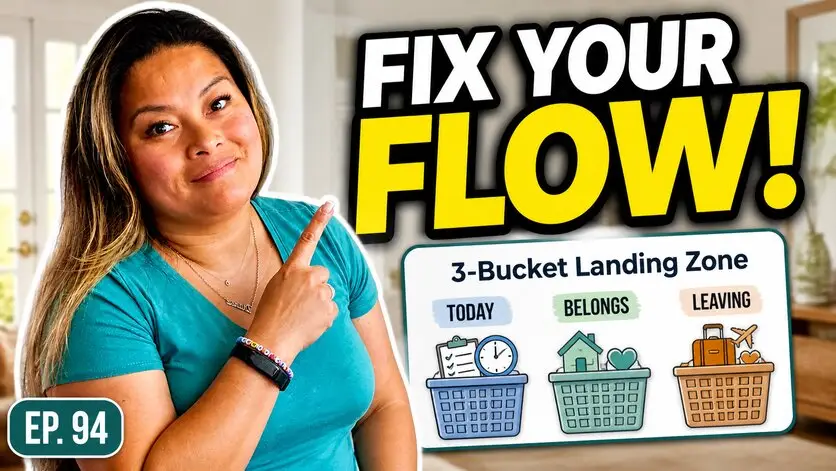
Dianne Jimenez pointing to a “Fix Your Flow” graphic with a 3-Bucket Landing Zone system for improving home organization flow.
Home organizing, Podcast Episodes

#94: Home Organization Flow: Why Your House Gets Messy

In this episode, Dianne explains why most clutter isn’t “random chaos.” It collects at the same friction points: entryways, kitchen counters, dining tables, stairs, and laundry zones. When your home doesn’t have a default place for things to land, your counters become the system.

You’ll learn how to reduce the mental load by building default paths so you’re not making constant decisions all day. Because when flow is broken, someone becomes the translator and the “where does this go” person, and that’s almost always mom.

Frustrated mom because her child is glued to her phone
Lead together, Podcast Episodes

#92: Default Parent Mental Load: How to Stop Being the Only Responsible Adult

Default Parent Mental Load: How to Stop Being the Only Responsible Adult

If you’ve ever thought, “I’m the only responsible adult in this house,” and then immediately felt guilty for thinking it… you’re not alone.

In fact, this is one of the most common things I hear from overwhelmed moms — especially the default parent.

And here’s the good news: this isn’t a “try harder” situation. Instead, it’s usually a home systems problem. More specifically, it’s a responsibility distribution problem.

So in this post, I’m going to break down why this keeps happening, and then I’ll give you one simple move you can make this week to start sharing the load.

Why the Default Parent Mental Load Feels So Heavy
First, let’s name what’s really going on.

This isn’t a motivation issue. It’s not that you need a prettier planner. And it’s not that you need better time management.

Rather, the problem is that one person is carrying too many roles at the same time.

Because when you’re the one remembering, noticing, planning, reminding, and following up, you’re not just “doing chores.”

You’re doing management. And management is exhausting.

The Real Problem Isn’t the Chores
A lot of moms assume the problem is the tasks.
However, the tasks are usually not the main issue.
Instead, what’s exhausting is the invisible work behind the tasks. So let’s talk about that.

The Invisible Job List (aka the Mental Load)
Most moms aren’t only doing the physical labor. They’re also running the invisible list behind everything.

For example, someone might take out the trash.
But who noticed it was full?
Who remembered trash day?
Who tied the bag, replaced the liner, and checked the other bins?

That invisible tracking is the mental load.
And when you carry the invisible list, you become the default parent — even if other people “help.”

a mom teaching chores for kids
Podcast Episodes, Raise Responsible Kids

#91: The First Chore Every Kid Over 7 Should Learn

If your kids help around the house but you still feel like everything ultimately falls on you, you’re not imagining it.
In this episode of the Organized-ish Parent Podcast, we’re breaking down why chores don’t actually reduce your workload — and what to do instead.

Because here’s the truth: chores aren’t about cleaning. They’re about ownership.

You’ll learn:
– Why kids “help” but responsibility doesn’t stick

– The 3 conditions that make chores actually work

– The first chore every kid over 7 should learn

– How to stop doing everything yourself without guilt

If you want to raise capable, responsible kids and lighten your mental load, this is where to start.

Home systems that contribute to a clutter-free home.
Home organizing, Podcast Episodes

#90: The 3 Home Systems Every Busy Mom Needs Before Trying Anything Else

If your routines never stick and your house feels overwhelming no matter how much you declutter, tidy, or organize… clutter might not be the real problem.

In this episode, I’m breaking down the 3 foundational home systems that make daily life feel lighter—and help routines finally stay in place:

✅ Drop Zone System (where daily stuff lands)

✅ Reset System (how your home returns to baseline daily)

✅ Responsibility System (who owns what—not who “helps”)

Because homes don’t run on motivation. They run on systems. And when these systems are missing, everything defaults back to mom.

🎧 Missed Episode 89? Watch/listen next: (add link)
That episode explains how to shrink routines so they actually stick.

access to the latest podcast episode placeholder
Podcast Episodes

#89: Why Your Routines Don’t Stick (And the Phase One Rule That Actually Works)

Why Your Routines Don’t Stick (And the Phase One Rule That Actually Works)

If your routines keep falling apart after a few weeks, I want you to hear this first:

It’s not because you lack discipline.
And it’s definitely not because you “just need to try harder.”

Most routines don’t stick because they’re built for perfect days — and real life isn’t perfect.

As busy moms, we tend to build routines around the version of life we wish we had. We imagine smooth mornings, predictable schedules, cooperative kids, and steady energy. However, what actually happens is very different. School schedules shift. Someone gets sick. Work demands increase. Activities stack up. Suddenly, the routine that felt doable last week feels impossible.
That doesn’t mean you failed. It means the routine wasn’t designed for real life.

Why Routines Fall Apart So Quickly

Here’s what I see over and over again.

Most routines collapse the moment something disrupts them. As soon as the day doesn’t go according to plan, the entire structure falls apart. Consequently, you feel behind, frustrated, and tempted to give up altogether.
However, routines don’t fail because you’re inconsistent. They fail because they’re too fragile.

Scroll to Top